Committing to a 30-day dry challenge—whether you are gearing up for Dry January, participating in Sober October, or simply hitting pause after a period of heavy stress—is one of the highest-leverage self-experiments you can conduct for your brain and body.
Yet, more than 40% of people who embark on a one-month alcohol-free challenge abandon it before reaching Day 14. This drop-off rarely happens because of a lack of willpower; it happens because people are unprepared for the specific biological rebound phases and social habit loops that trigger between Days 4 and 18. Below is your science-backed, week-by-week blueprint to navigate all 30 days and reap the profound physiological rewards.
| Phase | Physiological Milestones | Common Pitfalls & Triggers | Actionable Survival Strategy |
|---|---|---|---|
| Week 1 (Days 1–7) | Acetaldehyde clearance, blood sugar stabilization, GABA/glutamate reset | 5:00 PM evening cravings, restlessness, 3:00 AM awakenings | Stock bitter non-alcoholic drinks; practice 3-minute urge surfing; prioritize early bedtime |
| Week 2 (Days 8–14) | Deep REM sleep rebound, resting heart rate drops 4–8 BPM, reduced gastric inflammation | "I feel great, so one glass won't hurt" false confidence trap | Check your sleep tracking metrics; log monetary savings; replace the pouring ritual |
| Week 3 (Days 15–21) | Hepatic fat reduction (up to 15%), skin hydration boost, systemic inflammation dips | Boredom, social pressure during weekend dinners or events | Order club soda with a lime wedge immediately upon arriving; rehearse polite boundary scripts |
| Week 4 (Days 22–30) | Dopamine baseline reset, sustained cognitive focus, measurable calorie deficit | The "countdown sprint"—treating Day 31 as an impending binge | Define your post-challenge moderation framework; celebrate milestone badges |
Week 1 (Days 1–7): The Neurotransmitter Recalibration
The first seven days are primarily physiological. Alcohol stimulates inhibitory GABA receptors while blunting excitatory glutamate receptors. When ethanol suddenly disappears from your system, your central nervous system experiences a temporary excitatory surge as it recalibrates.
- Days 1 to 3: You may experience acute evening irritability, mild headaches, or "hanxiety" (hangover anxiety). By the 72-hour mark, circulating ethanol and toxic acetaldehyde are completely cleared.
- Days 4 to 7: Your liver resumes normal glycogen synthesis. Sleep may feel strange at first as your brain experiences a rebound in suppressed REM cycles, often resulting in vivid dreams.
Week 2 (Days 8–14): The REM Sleep & Energy Rebound
Entering the second week, the initial friction gives way to tangible physical rewards. Clinical studies show that by Day 10 to Day 14, nocturnal resting heart rate drops significantly, and Heart Rate Variability (HRV)—a primary indicator of autonomic nervous system resilience—improves markedly.
- Deep Cellular Hydration: Alcohol acts as an antidiuretic hormone inhibitor. By Week 2, your kidneys rebalance fluid retention, leading to a visible reduction in facial puffiness and brighter eyes.
- Digestive Lining Renewal: Gastric mucosa cells turn over rapidly. Heartburn, morning acid reflux, and chronic bloating typically fade away during this window.
- The Beware-of-Confidence Trap: Around Day 10, when you wake up feeling energetic and clear-headed, your brain will whisper: "See? You have full control. You can enjoy just two beers tonight." Recognize this cognitive rationalization for what it is—a dopamine trick.
Visual Momentum Tracker
Keep your 30-day streak unbroken on your monthly calendar
Fill every alcohol-free day with calm, visual green check-ins. Track exactly how much cash you have saved and watch your body recovery milestones unlock at Day 3, 7, 14, and 30—100% private with zero cloud uploads.
Start Your 30-Day Tracker on iOS →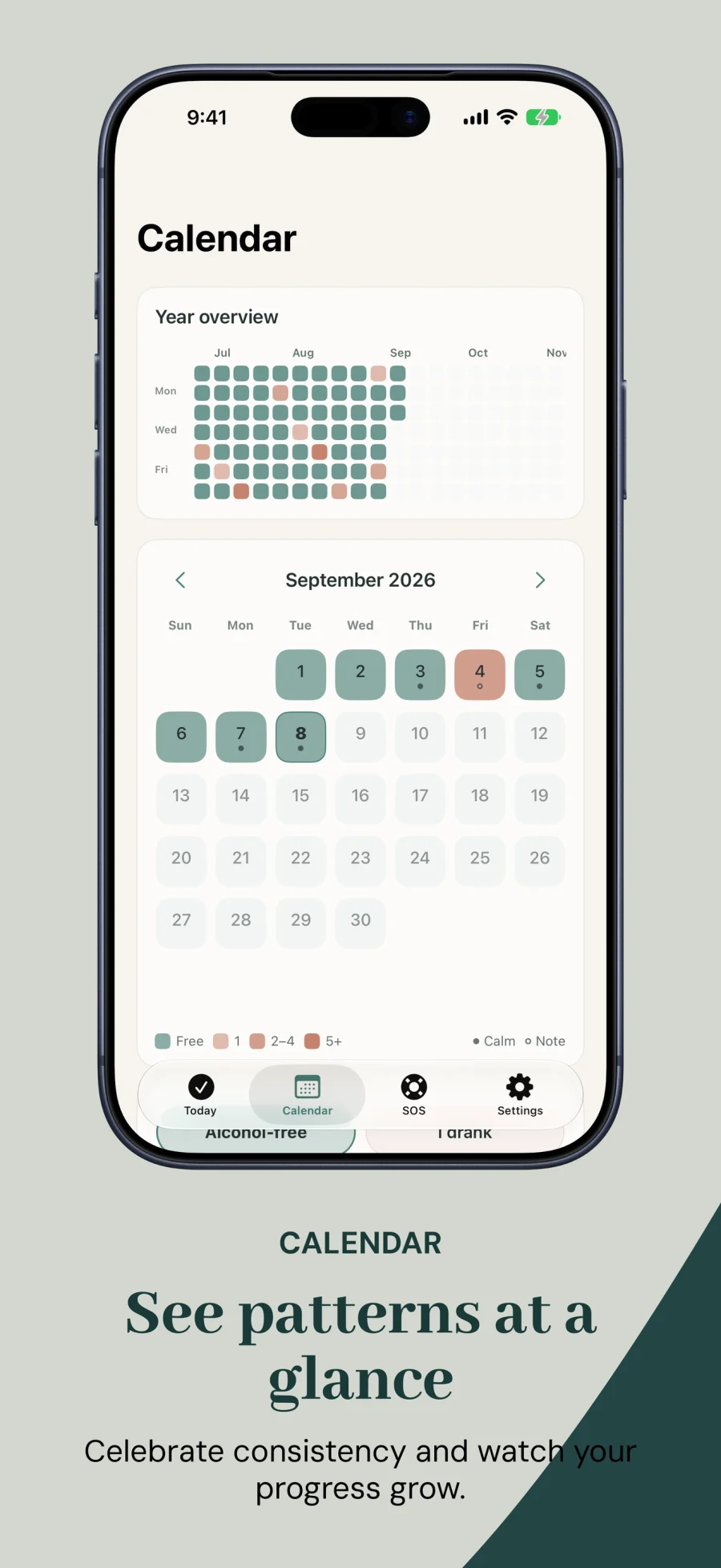
Week 3 (Days 15–21): Overcoming the Mid-Month Slump & Social Friction
Week 3 is where the novelty of the challenge begins to wear off. While the physiological withdrawal is long past, social friction often surfaces during Friday dinners or weekend gatherings with friends.
Surviving Week 3 requires tactical social friction management:
- Have a beverage in hand immediately: When attending social gatherings, order or pour a non-alcoholic drink immediately. When people see a glass with a lime in your hand, 90% of peer inquiries never happen.
- Use clean, neutral boundary phrases: Avoid defensive explanations. Simple phrases like "I am on a 30-day health reset for better sleep and focus" invite curiosity rather than debate.
- Track cumulative cash savings: By Day 20, the average moderate drinker has saved between $120 and $350 in alcohol purchases and late-night food deliveries. Earmark those savings for a tangible reward—a massage, new running shoes, or a fine dining experience.
Week 4 (Days 22–30): The Dopamine Reset & The Day 31 Transition
By the final week, dopamine baseline levels stabilize. Activities that once felt mundane when compared to high-intensity alcohol spikes—reading a book, morning trail walks, cooking a balanced dinner—become inherently satisfying once again.
In hospital trials evaluating 30-day dry challenge participants, researchers observed an average 15% reduction in liver fat, a 5% drop in systolic blood pressure, and a significant improvement in insulin sensitivity. You will reach Day 30 with enhanced mental stamina and sustained emotional regulation.
What Happens After Day 30?
The greatest risk of a 30-day dry challenge is viewing Day 30 as a finish line before an inevitable heavy rebound on Day 31. Instead, treat your 30 days as a laboratory baseline. Ask yourself:
- Which situations triggered genuine cravings, and which were mere boredom?
- How much better did your body perform in workouts and morning focus?
- Do you want to remain 100% alcohol-free, or adopt a mindful moderation rule (such as limiting drinking to weekend special occasions or capping at 2 standard drinks)?
By using a private, judgment-free tracker, you preserve your data and visual momentum whether you decide to extend your challenge to 60 days or transition into mindful moderation.