For decades, cultural messaging around alcohol has presented a strict binary: either you drink whenever you feel like it, or you hit rock bottom and must commit to absolute lifelong abstinence. But for millions of people, neither extreme fits. You might love sharing a full-bodied Cabernet with an anniversary dinner or grabbing a cold craft beer with close friends on a summer afternoon, yet despise waking up at 3:00 AM with a racing pulse, sluggish mornings, and unneeded calories.
You don't necessarily want or need to quit forever—you just want to drink less, regain control, and eliminate unconscious habit drinking.
This shift is known as mindful drinking or intentional moderation. While cutting down requires conscious behavioral design—because ethanol directly impairs the prefrontal cortex responsible for restraint—it is entirely achievable with clear psychological systems rather than white-knuckled willpower.
| Dimension | Unconscious Habit Drinking | All-or-Nothing Abstinence | Mindful Moderation |
|---|---|---|---|
| Decision Timing | Decided reactively when stressed or handed a drink | Decided once permanently ("I never drink") | Decided proactively before entering the venue |
| Weekly Rhythm | Drinks 4–7 nights per week on autopilot | 0 alcohol-free exceptions | 3–5 alcohol-free days per week; planned drink occasions |
| Slip-up Response | Ignored; cycle repeats | "Streak broken" guilt, shame, and relapse spiral | Data point recorded; curiosity over self-punishment |
| Quantity Ceiling | Undefined ("Just a couple") | Zero | Strict cap (e.g., max 2 standard drinks) |
| Primary Motivation | Numbing discomfort or social blending | Avoiding negative consequences | Maximizing presence, taste, and physical vitality |
The Neuroscience: Why Cutting Back Can Feel Harder Than Quitting
Before implementing rules, it is essential to understand the biological hurdle you are managing. When someone quits completely, their brain makes a single overarching decision: zero. There is no ongoing internal negotiation at 9:00 PM about whether a second glass is permissible.
When you aim to drink moderately, you encounter the pharmacological disinhibition curve:
- Drink 1: Ethanol triggers a rapid release of dopamine in the nucleus accumbens and enhances GABA signaling, producing mild euphoria and tension relief.
- Drink 2 and beyond: Blood alcohol concentration (BAC) reaches levels that dull the prefrontal cortex—the executive control center of your brain that regulates impulse control, future planning, and risk assessment.
The 5 Non-Negotiable Rules of Successful Alcohol Moderation
To bypass prefrontal fatigue, successful moderators use pre-commitment architecture—rules established well before the cork is pulled or the tab is opened.
1. The 72-Hour Clean Buffer (No Consecutive Drinking Days)
Never drink two days in a row. When you drink back-to-back evenings, your brain adapts to elevated GABA stimulation, priming your nervous system for an excitatory glutamate rebound that manifests as mild next-day restlessness or craving. Enforcing at least one—and preferably two—alcohol-free days between drinking occasions resets your neurotransmitter sensitivity and prevents evening wine from morphing into a daily reflex.
2. The Fixed Ceiling Rule (Decide Before You Arrive)
Never enter a restaurant, pub, or dinner party with a vague goal like "I'll take it easy tonight." Determine your exact numerical limit in advance (e.g., exactly two standard glasses of wine). Once you reach your ceiling, the drinking session is formally concluded, regardless of who orders another bottle or offers to buy a round.
3. The 1:1 Sparkling Hydration Gap
Alcohol is a potent diuretic that inhibits vasopressin (antidiuretic hormone), leading to rapid cellular dehydration. Frequently, the subconscious urge to finish a drink quickly is driven by simple physiological thirst. For every alcoholic drink you consume, immediately drink one full 12-ounce glass of iced sparkling water with lime before ordering another. This slows your rate of ethanol absorption by over 50% and gives your stomach volume signals time to register.
4. Never Drink to Transition Out of the Workday
If your default routine is pouring a drink at 5:30 PM to "switch off work mode," alcohol is acting as an emotional crutch rather than an intentional indulgence. Create a non-chemical transition ritual: a 15-minute brisk outdoor walk, a hot shower, a session of 3-minute paced breathing, or a flavored seltzer in a crystal glass. Save alcoholic drinks exclusively for relaxed social meals or celebratory moments.
5. Order by Quality, Never by Volume
Shift your relationship with alcohol from quantity to sensory appreciation. Instead of drinking three mediocre house beers or cheap boxed wine, spend that same budget on a single exceptional glass of vintage wine or craft cocktail. Sip it slowly, pair it with food, and savor the complex notes rather than gulping for a buzz.
Built into Alcohol Free Tracker
A tracker that never shames you for moderation
Log alcohol-free days alongside light or moderate days on a visual monthly heatmap—no broken-streak guilt, no judgment, and 100% private on your iPhone.
Track Mindful Drinking on iOS →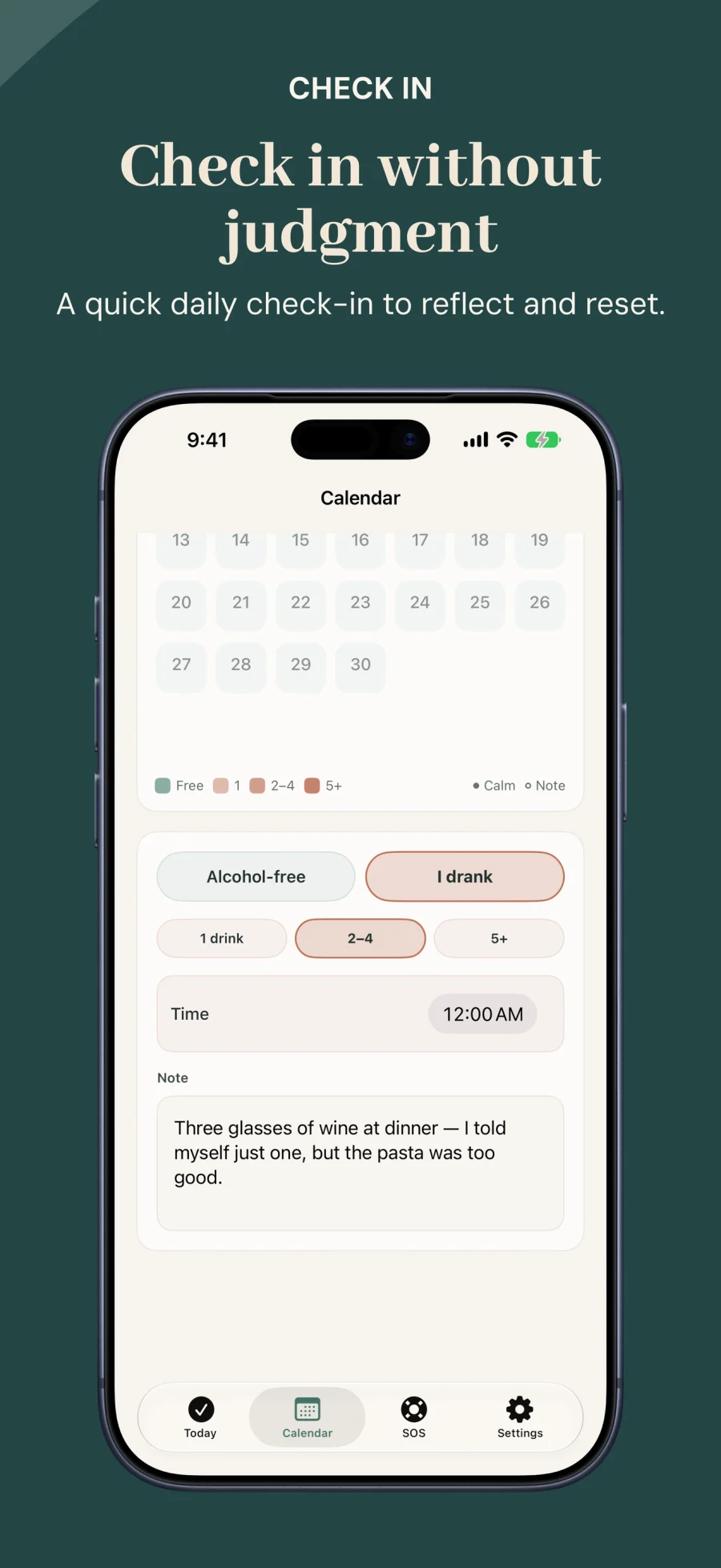
The Psychology of Dealing with Social Pressure
In social settings, other people's relationship with alcohol can inadvertently become an obstacle to your moderation goals. When someone urges you to "have just one more," they are rarely thinking about you—they are seeking validation for their own drinking behavior.
- Use definitive, low-friction scripts: Instead of saying "I'm trying to cut back" (which invites bargaining and teasing), say: "I'm good for tonight, thanks—sticking with sparkling water now." or "I've got an early workout tomorrow that I don't want to ruin."
- Always hold a beverage: A glass of soda water with a lime wedge or tonic with bitters is visually indistinguishable from a gin and tonic. Holding a drink in your hand eliminates 90% of unsolicited drink offers before they start.
- Master the "French Exit": When a social gathering shifts from dinner conversation to late-night binge drinking, recognize that your quality time has concluded. Politely say goodbye and head home to enjoy a peaceful night and a fresh morning.
Why Traditional Streak Counters Sabotage Moderation
Most habit-tracking apps are designed exclusively around all-or-nothing streaks: Day 1, Day 2, Day 45. If you drink a single glass of wine at a wedding, the app resets your score to zero and flashes an alert that makes you feel like a total failure.
Behavioral psychology calls this the "What-the-Hell Effect" (counterregulatory eating or drinking). When a person believes their flawless streak has been destroyed, they think: "Well, I already ruined my streak, so I might as well finish the whole bottle and start over on Monday."
True harm reduction and mindful drinking require a multi-state tracking system:
- Alcohol-Free Days: Green milestones that celebrate your recovery and restorative sleep.
- Light / Moderate Days: Planned, mindful drinking within your personal ceiling that does not trigger guilt or reset your hard-earned progress.
- Monthly Visual Heatmaps: Looking at a calendar showing 24 alcohol-free days and 4 moderate days proves you succeeded 85% of the month—a massive victory for your liver, cardiovascular health, and mental sharpness compared to drinking every night.
By removing shame and focusing on cumulative reduction, moderation stops feeling like a grueling test of endurance and becomes a sustainable, lifelong relationship with health.