When you decide to take a break from alcohol—whether for a 30-day dry challenge, mindful moderation, or long-term sobriety—your body begins a measurable sequence of physiological repair almost immediately after your last glass.
Unlike vague motivational slogans, biological recovery follows a predictable timeline driven by liver enzyme clearance, neurotransmitter rebalancing (GABA and glutamate), sleep architecture restoration, and cellular hydration. Below is what happens inside your body from 8 hours to 30 days alcohol-free.
| Milestone Window | Primary Physiological Shift | What You Actually Feel |
|---|---|---|
| 8 Hours | Blood alcohol concentration (BAC) drops; liver shifts back to glucose regulation | Morning blood sugar crashes begin stabilizing |
| 24 Hours | Acute acetaldehyde clearance & cellular rehydration | Brain fog starts lifting; night sweats or mild restlessness peak then subside |
| 72 Hours (Day 3) | GABA & glutamate neurotransmitter rebalance | "Hanxiety" (hangover anxiety) clears; emotional baseline steadies |
| 7 Days | Deep REM sleep architecture & HRV restoration | Waking up genuinely rested; resting heart rate drops by 4–8 BPM |
| 14 Days | Gastric mucosa repair & early hepatic fat reduction | Acid reflux and facial puffiness noticeably decrease |
| 30 Days | Dopamine receptor sensitivity & liver fat drop (up to 15–20%) | Natural motivation returns; skin tone brightens; sustained energy |
Hours 1 to 8: Blood Sugar & Acute Detox Initiation
While your liver metabolizes ethanol (at roughly one standard drink per hour via alcohol dehydrogenase), it temporarily deprioritizes gluconeogenesis—the process that keeps your blood sugar steady. By hour 8 after your last drink, circulating ethanol clears for most moderate drinkers, allowing your liver to resume normal glycogen regulation.
24 to 72 Hours: Clearing Acetaldehyde & Calming "Hanxiety"
Alcohol artificially boosts GABA (your brain's primary calming signal) while suppressing glutamate (its excitatory counterpart). To compensate, your brain down-regulates GABA receptors and produces extra glutamate. When you stop drinking, it takes roughly 48 to 72 hours for those receptors to recalibrate.
- At 24 hours: Your kidneys begin normalizing antidiuretic hormone (vasopressin) levels, allowing electrolytes and intracellular water to stay where they belong instead of flushing out.
- At 72 hours: The excitatory glutamate rebound subsides. For most people who experience post-drinking anxiety or racing thoughts, Day 3 marks the turning point where calm focus returns.
Built into Alcohol Free Tracker
See which physiological stage your body is in right now
Watch your progress across Acute Detox (8h), Neurotransmitter Balance (72h), and Deep REM Sleep Architecture (7d) automatically—stored 100% locally on your iPhone with zero accounts.
Track My Recovery Free on iOS →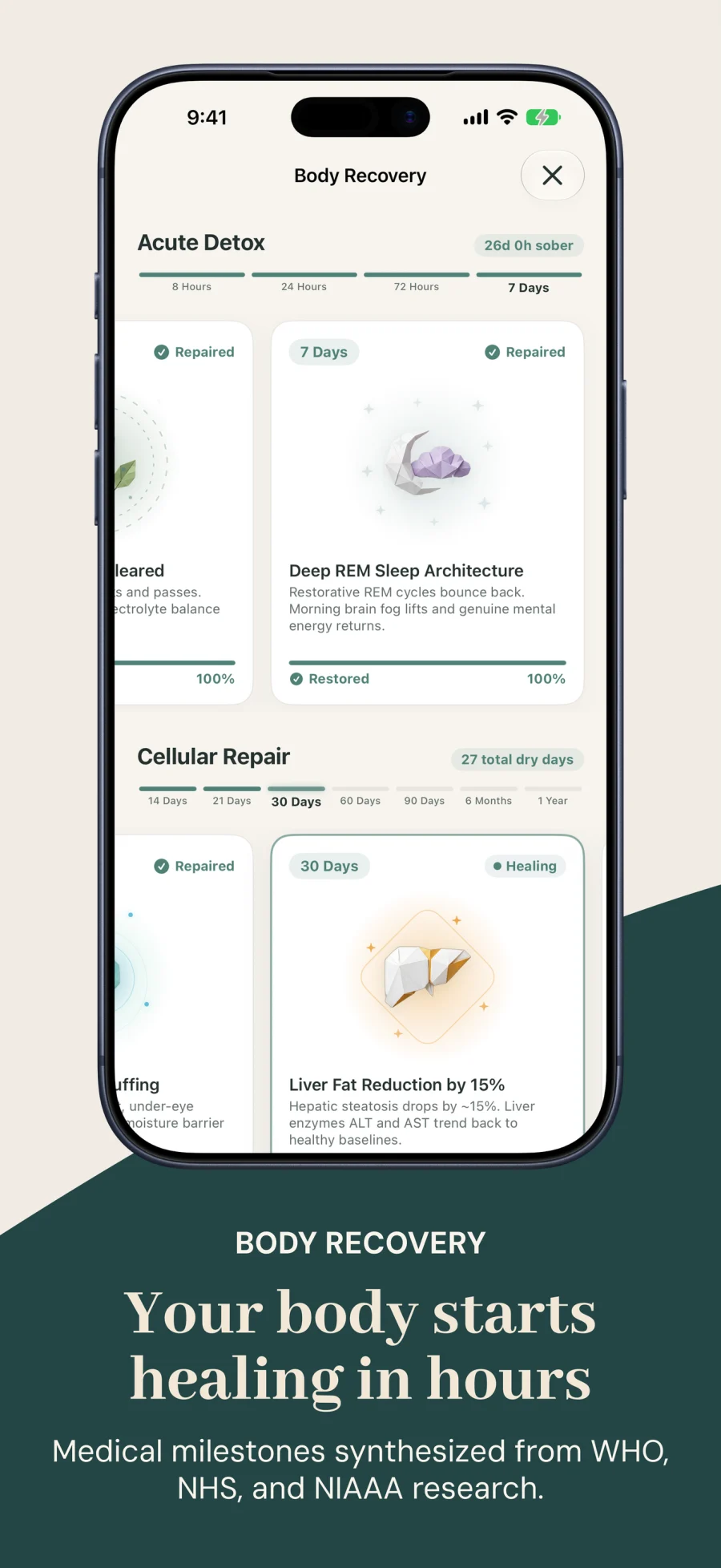
Day 7: Deep REM Sleep Architecture Unlocks
One of the most common misconceptions is that a nightcap helps you sleep. While alcohol is a sedative that can shorten sleep onset, it fragments the second half of the night and suppresses Rapid Eye Movement (REM) sleep—the stage responsible for emotional processing and memory consolidation.
By Day 7 alcohol-free, sleep studies consistently show a rebound in natural REM cycles alongside a measurable drop in sleeping heart rate (often 4 to 8 beats per minute lower) and a rise in Heart Rate Variability (HRV). Even if you sleep the same total number of hours, seven alcohol-free nights deliver dramatically deeper restoration.
Day 14: Gut Lining Repair & Reduced Inflammation
Ethanol irritates the gastric mucosa and increases intestinal permeability, triggering low-grade systemic inflammation and water retention (especially around the jawline and under the eyes). Two weeks without alcohol allows the stomach lining's epithelial cells to regenerate:
- Digestive comfort: Morning acid reflux and bloating often resolve between Days 10 and 14.
- Caloric deficit without dieting: Removing 5 to 10 drinks per week eliminates 750 to 1,800 empty calories—alongside the late-night food cravings triggered by lowered inhibition.
Day 30: Liver Fat Reduction & Dopamine Reset
By Day 30, the cumulative shifts become unmistakable both on lab markers and in daily mood:
- Hepatic recovery: Clinical observations of one-month sobriety challenges show liver fat (hepatic steatosis) can decrease by up to 15–20% in regular drinkers.
- Dopamine baseline: Because alcohol triggers artificial dopamine spikes, frequent drinking dulls your reward system to everyday pleasures. After four weeks alcohol-free, receptor sensitivity rebounds—making morning coffee, workouts, and quiet evenings feel rewarding again.
How to Track Your Recovery Without Pressure
Whether your goal is complete sobriety or cutting back to fewer drinking days per month, tracking works best when it is private, honest, and free from streak-shaming. When cravings peak in the evening—typically cresting and fading within 3 to 5 minutes—pairing a visual body-recovery timeline with a 3-minute paced breathing session helps you protect your momentum one day at a time.