You wake up abruptly at 3:30 or 4:00 AM. Your chest feels tight, your resting heart rate is thumping in your ears, and an overwhelming wave of existential dread washes over you. Within seconds, your thoughts spiral into an agonizing loop: "What did I say last night? Did I offend someone? Why does my entire life suddenly feel like an unmanageable catastrophe?"
For millions of social drinkers, this sudden, paralyzing post-drinking panic—widely known as "hanxiety" (hangover anxiety)—is far more distressing than physical headache or nausea.
If you are experiencing this right now, take a slow breath and hear this clearly: you are not losing your mind, and you have not suffered a character collapse. Hanxiety is not a moral failing or psychological defect; it is a predictable, clinically verified neurochemical rebound caused by your central nervous system fighting to restore equilibrium after an alcohol-induced sedative crash.
| Recovery Window | Neurochemical Mechanism | What You Experience | Immediate Relief Action |
|---|---|---|---|
| Hours 0–4 (Sedation) | Ethanol boosts GABA-A & suppresses NMDA/glutamate | Artificial sleepiness; zero restorative REM sleep cycles | Rest; allow liver enzymes to metabolize circulating alcohol |
| Hours 4–8 (The Rebound) | BAC hits zero; massive glutamate surge & cortisol spike | Sudden 4 AM panic wake-up, racing pulse, irrational dread | Physiological sigh (double inhale, long exhale) & water |
| Hours 8–18 (Peak Hanxiety) | GABA depletion, high noradrenaline & cytokine inflammation | Sensory hypersensitivity, brain fog, social paranoia, nausea | Electrolytes (magnesium/sodium), complex carbs, zero social media |
| Hours 18–28 (Evening Calm) | Acetaldehyde clears; parasympathetic nerve tone rebuilds | Anxiety softens into physical fatigue; natural sleep drive rises | L-theanine or chamomile tea, warm shower, early bedtime |
| Hours 28–48 (Baseline Reset) | GABA/glutamate homeostasis and REM sleep restore | Mental clarity, stable mood, and emotional confidence return | Reflect on your drinking patterns without guilt or self-shame |
The Neurobiology of Hanxiety: The GABA vs. Glutamate Rebound
To stop hangover anxiety, you must understand the two primary neurotransmitters that control your brain's accelerator and brake pedals:
- GABA (Gamma-Aminobutyric Acid): Your brain's primary inhibitory neurotransmitter. It acts as the chemical brake pedal, dampening neural excitement, relaxing muscles, and reducing anxiety.
- Glutamate: Your brain's primary excitatory neurotransmitter. It acts as the gas pedal, stimulating brain activity, alertness, cognitive processing, and memory encoding.
When you consume alcohol, ethanol acts as a powerful central nervous system depressant. It artificially mimics and amplifies GABA signaling while blocking glutamate receptors (specifically NMDA receptors). For the first few hours, this chemical intervention makes you feel relaxed, carefree, and socially uninhibited.
However, the human brain is an exquisitely tuned organ dedicated to homeostasis (biological balance). Sensing an artificial flood of sedation, your brain mounts an emergency defense: it down-regulates sensitive GABA receptors (making them less responsive) and ramps up production of glutamate receptors to keep your heart beating, lungs breathing, and brain functioning.
Cortisol, Vasopressin & Acetaldehyde: The Physiological Multipliers
The neurotransmitter rebound does not happen in isolation. Several biological ripple effects compound the feeling of morning dread:
- Cortisol & Noradrenaline Spikes: Research demonstrates that alcohol withdrawal elevates circulating stress hormones—cortisol and noradrenaline—by up to 20–30%. Your sympathetic nervous system is physically primed for an emergency that does not exist.
- Reactive Hypoglycemia: While your liver is busy breaking down ethanol into toxic acetaldehyde and then acetate, it temporarily halts gluconeogenesis (glucose production). Morning blood sugar crashes leave your brain starving for fuel, mimicking the physical tremors and lightheadedness of a panic attack.
- Vasopressin Suppression & Dehydration: Alcohol shuts down the pituitary hormone vasopressin (antidiuretic hormone), causing rapid fluid and electrolyte flushing. Cellular dehydration in the brain directly triggers headaches and fatigue.
- Systemic Cytokine Inflammation: Acetaldehyde irritates the gastric mucosa and increases intestinal permeability. This allows bacterial endotoxins to enter the bloodstream, sparking an inflammatory cytokine cascade that communicates directly with the amygdala—the brain's emotional fear center.
Built into Alcohol Free Tracker
Track your neurotransmitter reset after drinking
See exactly when GABA and glutamate balance returns to baseline after a heavy night—100% privately on your iPhone with zero accounts, zero cloud tracking, and zero judgment.
Track Your Recovery Free on iOS →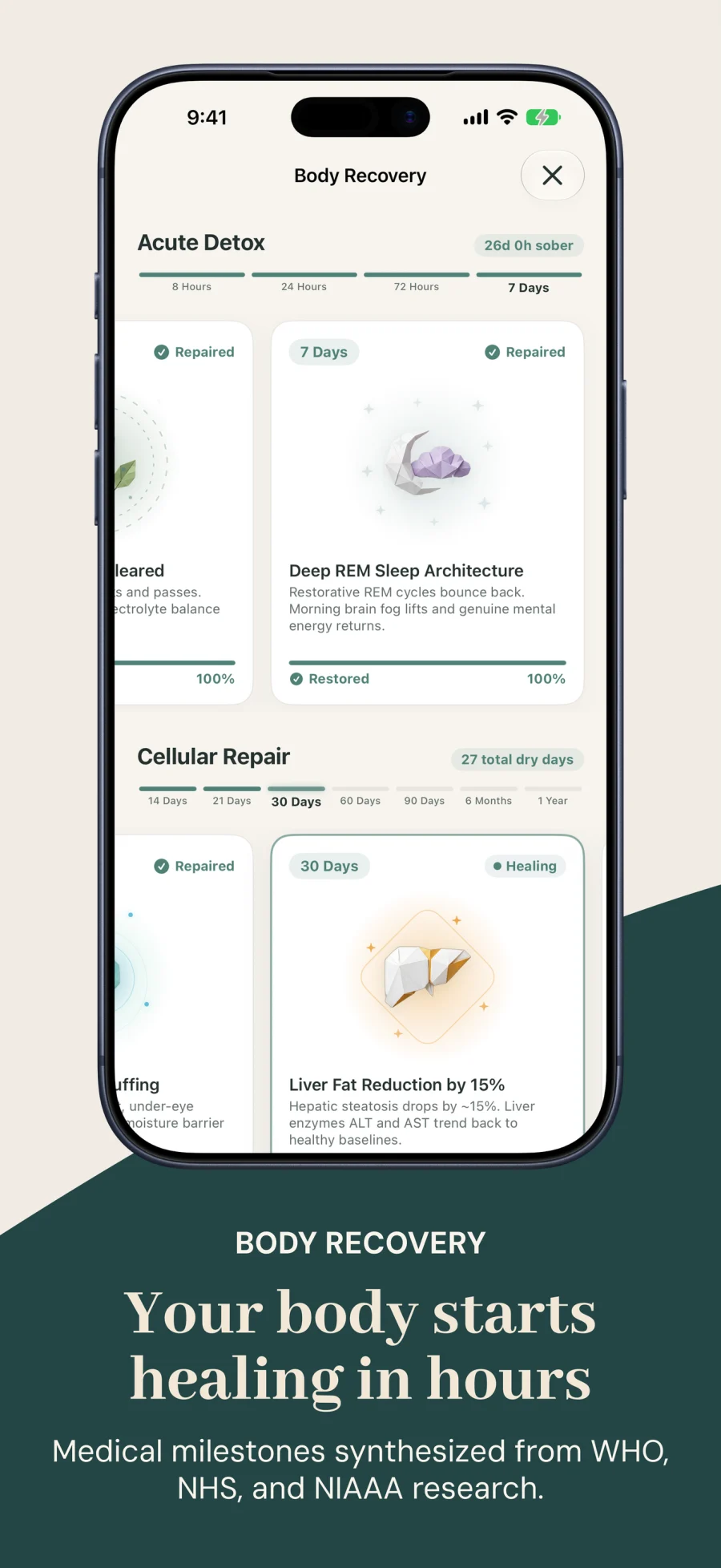
The 24-Hour Hanxiety Reset Protocol (Step-by-Step)
When you are in the grip of post-drinking anxiety, vague advice like "just relax" does not help. Use this evidence-based 5-step physiological protocol to steadily discharge the glutamate surge:
Step 1: Rapid Autonomic Downshift (The Physiological Sigh)
You cannot use a hyperactive mind to calm a hyperactive mind; you must use the body. Developed in pulmonary science and popularized by Stanford neurobiology, the Physiological Sigh is the fastest biological method to engage your vagus nerve and slow your heart rate:
- Take a deep, full inhale through your nose.
- At the very top of the breath, take a second, sharp "sip" of air to fully expand collapsed alveoli in your lungs.
- Release a long, slow, unforced exhale through your mouth (lasting 5 to 7 seconds).
- Repeat this cycle 3 to 5 times. Notice your shoulders dropping and heart rate steadying.
Step 2: Rehydrate with Salt, Potassium & Magnesium
Plain tap water is not enough because your cells lack the osmotic minerals required to retain intracellular fluid. Drink 16–20 ounces of water mixed with an electrolyte packet containing sodium, potassium, and magnesium glycinate. Magnesium acts as a natural, mild NMDA receptor blocker, helping to calm excess glutamate signaling.
Step 3: Stabilize Blood Sugar with Gentle Nutrition
Even if you have zero appetite, eat a simple meal combining complex carbohydrates, protein, and healthy fats within two hours of waking: oatmeal with banana and peanut butter, or scrambled eggs on whole-grain toast. Eggs are exceptionally rich in choline and cysteine, which aid liver detoxification and acetylcholine synthesis.
Step 4: Practice Cognitive Externalization (The "Glutamate Reality Check")
Your anxious brain will invent plausible narratives to justify its high-alert chemical state: "My boss hates me," "My friends are disgusted with me," "I ruined my life." Understand that the feeling of doom preceded the thought. Your brain is looking for a storyline to match its elevated adrenaline.
- Write it down: Jot down your top three fears on paper. Label them clearly: "This is an exaggerated thought caused by glutamate rebound, not an actual crisis."
- The 6:00 PM Rule: Do not send frantic apology texts, make life-altering decisions, or obsessively check group chats until 6:00 PM, when your neurotransmitter baseline has stabilized. Almost every "crisis" vanishes by sunset.
Step 5: Avoid the "Hair of the Dog" Trap
Having a morning mimosa or beer provides instant relief for one reason only: it re-supplies ethanol to your starving GABA receptors. But this only postpones the inevitable bill with exorbitant interest. When that drink wears off, the glutamate rebound returns with doubled intensity, transforming a 24-hour hangover into a multi-day panic spiral.
How Tracking Changes Your Relationship with Alcohol
Experiencing frequent hanxiety is often the turning point where drinking stops being fun and begins exacting a heavy cognitive tax. Tracking your alcohol-free days, monitoring your body's recovery milestones, and logging your mood provides objective proof of how clear and resilient your mind feels when GABA and glutamate remain balanced.
With a private, offline tracker, you can observe your patterns honestly—free from public streaks, social pressure, or guilt. When you protect your weekends from hanxiety, you reclaim your mental peace.