When you make the deeply personal choice to track your alcohol intake—whether stepping into a 30-day reset, practicing mindful drinking, or committing to long-term sobriety—the last thing you want is a mandatory registration screen demanding your email, phone number, and social profile.
Yet, the vast majority of modern sobriety apps follow the same silicon valley playbook: they force you into a cloud account, prompt you to participate in public comment threads, and upload your intimate daily habit logs to corporate remote databases. For millions of people, this creates unnecessary anxiety, privacy risks, and social fatigue.
Choosing a private, local-first sobriety tracker offers a calmer, safer, and distraction-free path to personal health. Below is an evidence-based breakdown of why offline sobriety tracking matters, the hidden risks of cloud habit apps, and how to protect your personal recovery journey.
| Privacy & Experience Dimension | Typical Cloud Community Apps (e.g. I Am Sober, Reframe) | 100% Local-First Private Tracker (Alcohol Free Tracker) |
|---|---|---|
| Account Requirement | Mandatory email, Apple ID sign-in, or third-party OAuth | Zero accounts: Open the app and start tracking in 3 seconds |
| Data Storage Location | Remote cloud servers, third-party analytics & marketing databases | 100% On-Device: Stored securely in your iPhone's local sandbox |
| Social Feeds & Comments | Public message boards, peer comparison, strangers' relapse posts | Intimate & Solitary: Zero feeds, zero comments, zero social performance |
| Offline Functionality | Requires active internet connection for sync, community feeds, and auth | Full Offline Support: Fully functional on airplane mode or off-grid retreats |
| Psychological Framework | Streak-shaming resets, guilt notifications, and public accountability pressure | Compassionate Insight: Monthly heatmaps, private urge surfing, no shame |
| Pricing & Monetization | Aggressive recurring paywalls ($60 to $120/year) | Transparent & Fair: Free core features with one-time lifetime option |
The Hidden Risks of Cloud-Based Sobriety Tracking
Health habits and alcohol consumption logs are among the most sensitive personal data points you can create on a mobile device. Entrusting that data to cloud-centric platforms introduces three critical vulnerabilities:
- Data Broker & Ad Tracking Leakage: While health apps may state they adhere to privacy policies, recent investigative reports by cybersecurity researchers have revealed that numerous mental wellness and habit-tracking applications bundle third-party SDKs (such as Facebook App Events, Google Firebase, and marketing attribution pixels) that transmit behavioral identifiers across web brokers.
- Corporate Server Breaches: Any database connected to the public internet can be compromised. A data leak exposing personal alcohol consumption records, relapse dates, or private journal entries can lead to severe personal, professional, and insurance complications.
- Subpoena & Regulatory Exposure: Unlike medical records protected by strict HIPAA guidelines, commercial consumer apps stored on cloud servers are frequently subject to corporate subpoenas, cross-border data requests, or corporate acquisitions where your user profile becomes an asset sold to the highest bidder.
Why "No Community" is a Feature, Not a Flaw
Many popular sobriety apps promote their public message boards as an indispensable feature. While peer support is undeniably valuable in clinical group therapy or 12-step programs, public in-app social feeds often backfire in daily life:
- Emotional Contagion & Trigger Loops: Scrolling through a public feed filled with vivid descriptions of severe cravings, relationship turmoil, or tragic relapse stories activates the brain's mirror neurons. Research into cognitive behavioral psychology demonstrates that exposure to relapse discourse can paradoxically increase your own urge to drink.
- Streak Shaming & Social Comparison: Seeing peers boast about "1,000 Days Squeaky Clean" while you are struggling with a Day 3 craving produces impostor syndrome. When a slip occurs, users often abandon the app entirely rather than face public embarrassment in the community feed.
- The Dopamine Trap: When an app replaces alcohol cravings with notifications, upvotes, badges, and comment likes, it simply swaps one external dopamine stimulus for another. True long-term behavioral transformation requires building quiet internal self-efficacy, not chasing validation from anonymous strangers.
Built for Radical Privacy
Track your sobriety 100% locally on iPhone
Zero accounts, zero email collection, zero cloud analytics. Your sober counter, body recovery milestones, and savings stay private in your pocket—where they belong.
Get Private Sobriety Tracker Free →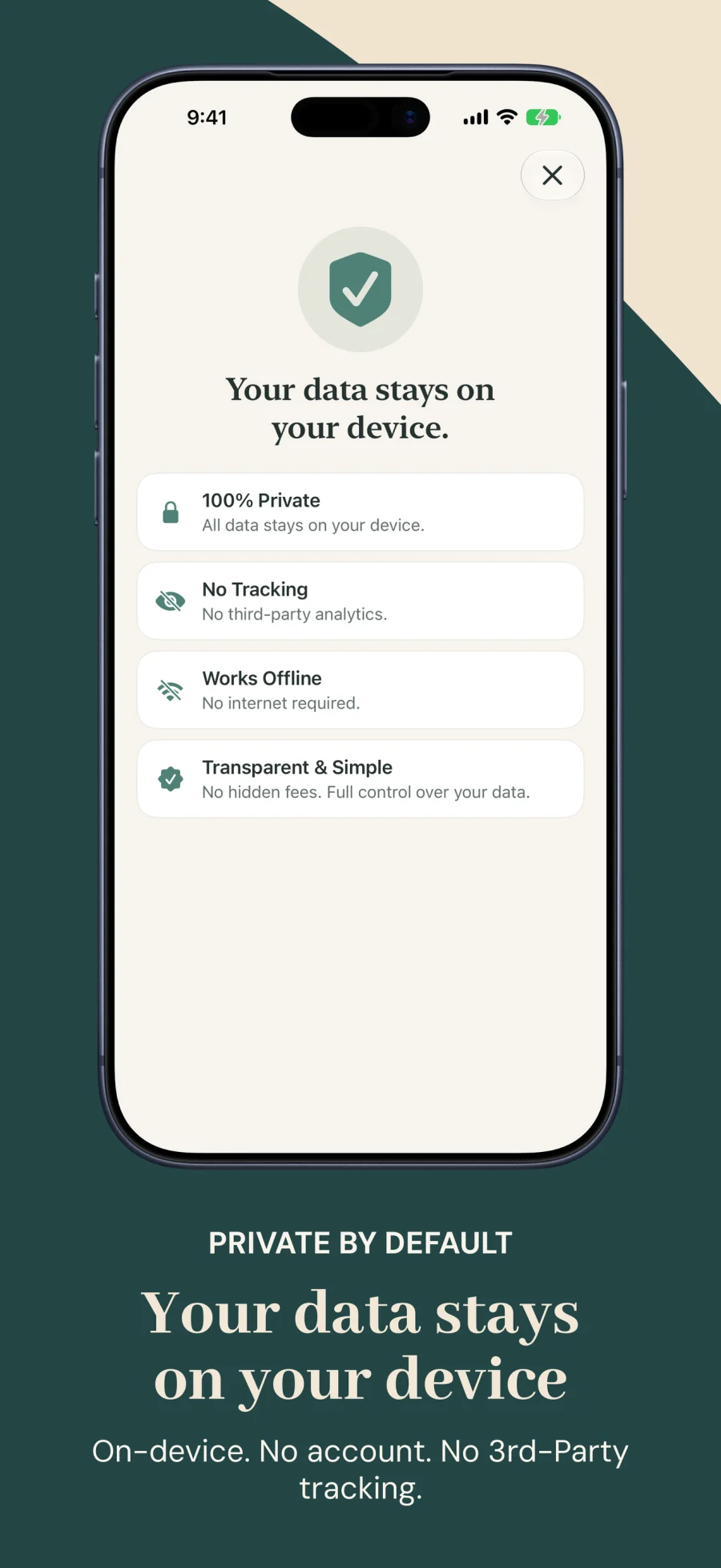
The 4 Pillars of a Truly Private Sobriety Tracker
If you prioritize mental peace and total confidentiality, look for these four technical and design principles when evaluating an alcohol tracker:
1. Zero-Account Instant Onboarding
A trustworthy local tracker requires no friction. You should be able to download the app, enter your quit date or last drink time, and immediately access your dashboard. If an app blocks your progress with "Sign in with Google" or requires your email before showing a single screen, it is designed for marketing funnels, not your privacy.
2. Complete Offline Reliability
Cravings do not wait for strong Wi-Fi or 5G coverage. Whether you are on a long-haul flight, camping in a national park, or riding the subway after a demanding workday, your urge surfing tools, timer counters, and physiological recovery milestones should execute flawlessly without an internet connection.
3. Comprehensive Physiological Milestones Over Streak Counters
A simple day counter reduces your multifaceted health journey to a fragile number that shatters upon a single slip. A superior private tracker integrates biological recovery stages—such as blood sugar stabilization (8h), REM sleep cycle restoration (7d), and liver fat reduction (30d)—so you can anchor your progress to concrete science rather than emotional guilt.
4. Built-in Somatic Urge Surfing (Without Noise)
When the 5:00 PM evening habit reflex strikes, reading internet comments does not calm an overstimulated nervous system. Neuroscience research shows that cravings peak and dissipate within 3 to 5 minutes. A focused private tool provides tactile, paced breathing exercises (such as 4-7-8 physiological sighs) and spatial audio soundscapes to soothe your amygdala in real time.
Reclaiming Control of Your Personal Health Narrative
Your relationship with alcohol is personal, nuanced, and evolving. Whether your intention is complete lifelong abstinence, an exploratory 30-day dry challenge, or mindful moderation without binge drinking, you have the right to document your transformation in private.
By selecting a local-first, zero-account tracker, you protect yourself from corporate data surveillance, eliminate the mental drain of public social comparison, and create a calm sanctuary on your device dedicated entirely to your wellbeing.