One of the most immediate and rewarding physical changes people notice when they stop drinking alcohol is measurable, sustainable weight loss. Whether you are embarking on Dry January, taking an intentional 30-day reset, or adopting a permanent alcohol-free lifestyle, shedding excess pounds without restrictive dieting is remarkably common.
However, weight loss after eliminating alcohol is rarely a straight, linear line. The scale fluctuates depending on cellular rehydration, systemic inflammation reduction, hormonal recalibration, and visceral fat metabolism. Understanding the science behind how alcohol blocks fat burning and following an evidence-based quit drinking weight loss timeline helps set realistic expectations while keeping your motivation strong.
| Milestone Window | Primary Metabolic Shift | Average Weight Change | Visible Physical Changes |
|---|---|---|---|
| Week 1 (Days 1–7) | Systemic debloating & cellular fluid rebalancing | −2 to −5 lbs (primarily water weight & edema) | Facial puffiness decreases; under-eye swelling clears |
| Week 2 (Days 8–14) | Gastric mucosa healing & real caloric deficit starts | −1 to −2 lbs (active fat loss begins) | Digestive bloating flattens; morning acid reflux subsides |
| Month 1 (Days 15–30) | Hepatic fat reduction (up to 15–20%) & liver enzyme reset | −3 to −8 lbs total fat loss | Looser waistband; improved skin elasticity and vitality |
| Month 2 (Days 31–60) | Deep visceral belly fat oxidation & insulin sensitivity | −6 to −14 lbs total fat loss | Noticeable abdominal flattening; vascular definition returns |
| Month 3+ (Days 61–90) | Metabolic set-point reset & lean mass preservation | −10 to −25+ lbs total fat loss | Dramatic body recomposition; stable all-day energy levels |
The Biochemical Trap: Why Alcohol Shuts Down Fat Burning
To understand why weight drops so quickly when you quit drinking, you have to look at how ethanol interacts with your liver and metabolism. Alcohol contains 7 empty calories per gram—nearly as calorie-dense as pure dietary fat (9 kcal/g), but devoid of vitamins, minerals, fiber, or amino acids.
More importantly, your body cannot store alcohol. Because ethanol is a toxic compound, your liver immediately prioritizes metabolizing it into acetaldehyde and then into acetate. While your liver is breaking down acetate:
- Lipolysis stops cold: Whole-body lipid oxidation (fat burning) drops by up to 73% within an hour of your first drink. Your body ceases burning stored adipose tissue entirely until all alcohol is cleared.
- Dietary calories get stored as fat: Any carbohydrates, fats, or proteins consumed alongside alcohol—such as bar snacks, late-night pizza, or rich dinners—are shunted directly into fat storage because your metabolic furnace is occupied with ethanol.
- Hunger hormones surge: Alcohol stimulates neuropeptide Y (NPY) and suppresses leptin (the satiety hormone) while spiking ghrelin, driving the uncontrollable late-night appetite familiar to anyone who has ever raided the fridge after an evening out.
Week 1: The Debloating Phase (Days 1 to 7)
During the first seven days without alcohol, the rapid drop on the bathroom scale—often between 2 and 5 pounds—is primarily due to the loss of retained water and reduced systemic inflammation rather than pure adipose tissue.
Because alcohol is a potent diuretic that inhibits vasopressin (antidiuretic hormone), heavy or regular drinking paradoxically triggers defensive fluid retention. Tissues hold onto water to prevent acute dehydration, causing puffy cheeks, swollen ankles, and abdominal distension. Once your kidneys normalize electrolyte balance and cortisol levels begin their descent around Day 4 to Day 7, this excess fluid flushes out naturally.
You will also notice your resting heart rate (RHR) dropping by 4 to 8 beats per minute, signaling that systemic cardiovascular strain is easing.
Built into Alcohol Free Tracker
Track empty liquid calories eliminated automatically
Calculate the exact calories and cash you save every alcohol-free week on iPhone. 100% private and offline—zero accounts or cloud tracking.
Calculate Your Calorie Deficit on iOS →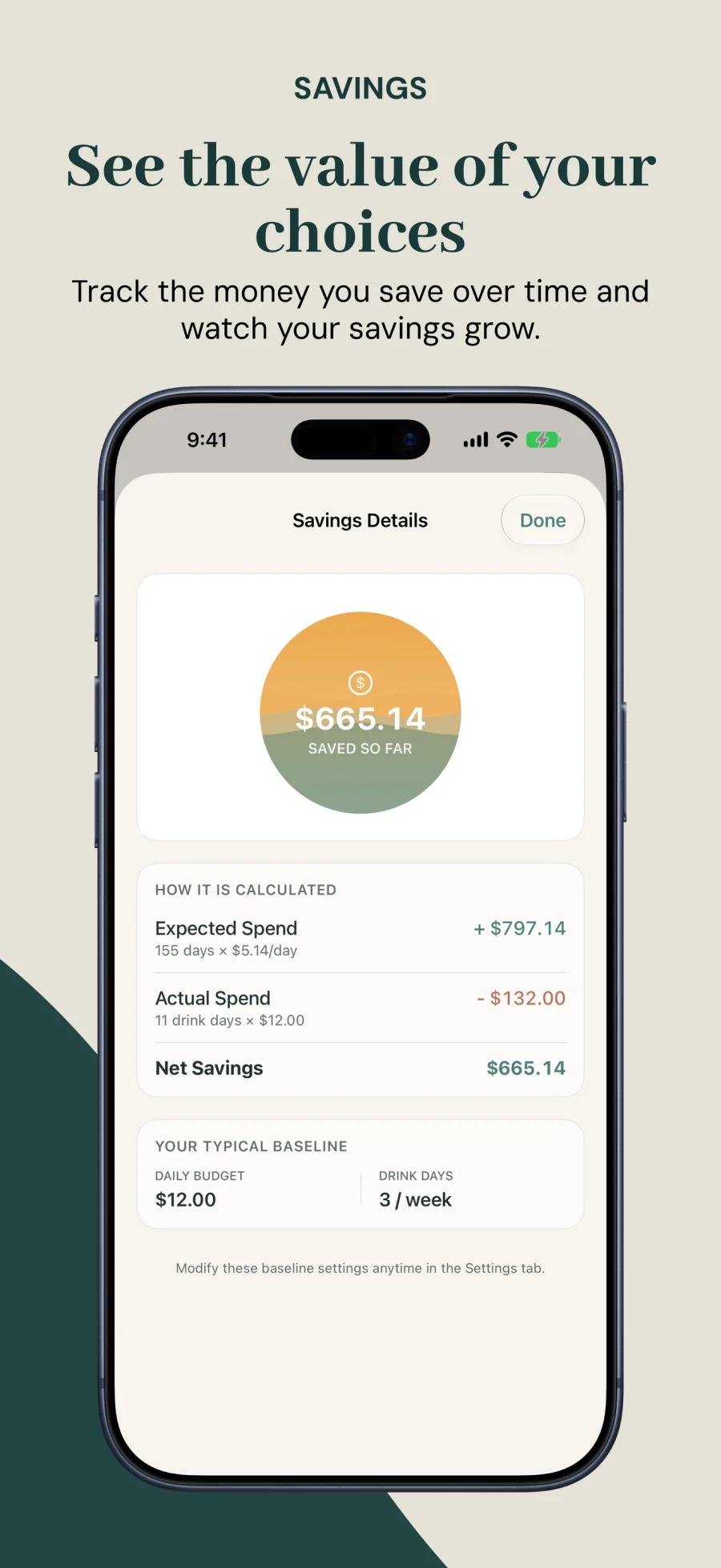
Weeks 2 to 4: The Caloric Deficit & Liver Reset (Days 8 to 30)
By the second week, genuine fat loss takes over. For a moderate to heavy social drinker consuming 10 to 15 drinks per week, quitting alcohol eliminates between 1,500 and 3,000 empty calories every single week:
- Direct beverage calories: A 5 oz glass of dry wine has ~125 kcal; a pint of craft beer packs 200 to 280 kcal; and a sugary cocktail can easily top 300 to 450 kcal. Removing 12 drinks a week eliminates ~2,400 liquid calories.
- Secondary food calories: Without late-night impaired eating and grease-heavy hangover recovery meals, most people shave an additional 1,000 to 2,000 calories per week without feeling deprived.
Since 3,500 calories roughly equates to one pound of body fat, this creates a natural deficit of 1 to 1.5 pounds of pure fat per week. In addition, ultrasound studies have demonstrated that 30 consecutive days without alcohol can reduce liver fat (hepatic steatosis) by up to 15% to 20%, restoring the liver's ability to efficiently process glucose and lipids.
Months 2 and 3: Shedding Visceral Belly Fat (Days 31 to 90)
Why do regular drinkers develop an "alcohol belly"? The answer lies in visceral fat—the dangerous fat stored deep within the abdominal cavity, surrounding internal organs like the liver, pancreas, and intestines.
Alcohol promotes visceral adiposity through three primary hormonal pathways:
- Cortisol elevation: Chronic alcohol intake keeps baseline cortisol elevated, which directly activates enzymes that shuttle triglycerides into deep visceral fat deposits.
- Sex hormone disruption: Alcohol suppresses free testosterone in men (reducing metabolic rate and muscle retention) while altering estrogen metabolism in women, predisposing the body to central abdominal fat distribution.
- Insulin resistance: Frequent blood sugar surges and liver stress reduce peripheral insulin sensitivity, locking excess carbohydrates into abdominal fat stores.
Between Day 30 and Day 90 of sobriety, sustained low cortisol and normalized insulin sensitivity allow your body to mobilize this stubborn visceral adipose tissue. Clothes fit substantially looser around the waistline, digestion feels light, and morning energy becomes consistent.
Navigating the Early Sugar Craving Rebound
Around Day 7 to Day 14, many people find themselves craving ice cream, chocolate, or candy with surprising intensity. Do not panic—this is an entirely normal physiological response with two distinct causes:
- The Blood Glucose Drop: If you regularly drank wine, beer, or cocktails, your body grew accustomed to massive evening surges of simple carbohydrates. When that flow stops, your blood glucose drops slightly in the evening hours.
- Dopamine Seeking: Alcohol provided an effortless, artificial surge of dopamine. When denied alcohol, your brain naturally seeks the fastest available alternative to stimulate its reward receptors—refined sugar.
How to Maximize Your Results Without Pressure
Losing weight after quitting drinking should feel like an empowering byproduct of self-care, not an agonizing diet. Here is how to maintain steady momentum:
- Prioritize Deep Sleep: Alcohol severely disrupts REM sleep architecture. After Day 7, as natural REM cycles return, your growth hormone production increases during slow-wave sleep, accelerating tissue repair and fat oxidation.
- Hydrate with Electrolytes: Cellular recovery requires clean water and essential minerals (sodium, potassium, magnesium). Proper hydration curbs phantom hunger cues that are actually mild thirst.
- Track Avoided Calories Visually: Watching your cumulative empty calories eliminated and cash saved grow day after day provides the concrete dopamine reinforcement needed to navigate temporary cravings.